Introduction — first impressions and who should read this
Parents who need truly unscented, gentle wipes know how hard it is to find a bulk option that actually feels mild on newborn skin. We tested the Huggies Natural Care wipes to see whether the label—unscented, hypoallergenic, 99% purified water—matches the real-life experience.
Quick snapshot for busy shoppers: see the product overview for detailed specs, the feature deep-dive for ingredients and certifications, and the value section to calculate cost per wipe using the current listing price (the page currently shows a placeholder of GBP0.00).
This review covers a clear product overview, a deep feature analysis, real-customer feedback synthesis, step-by-step at-home tests you can run, and side-by-side comparisons with Pampers Sensitive Wipes and WaterWipes. By the end you’ll know whether these wipes fit a sensitivity-first shopping list.


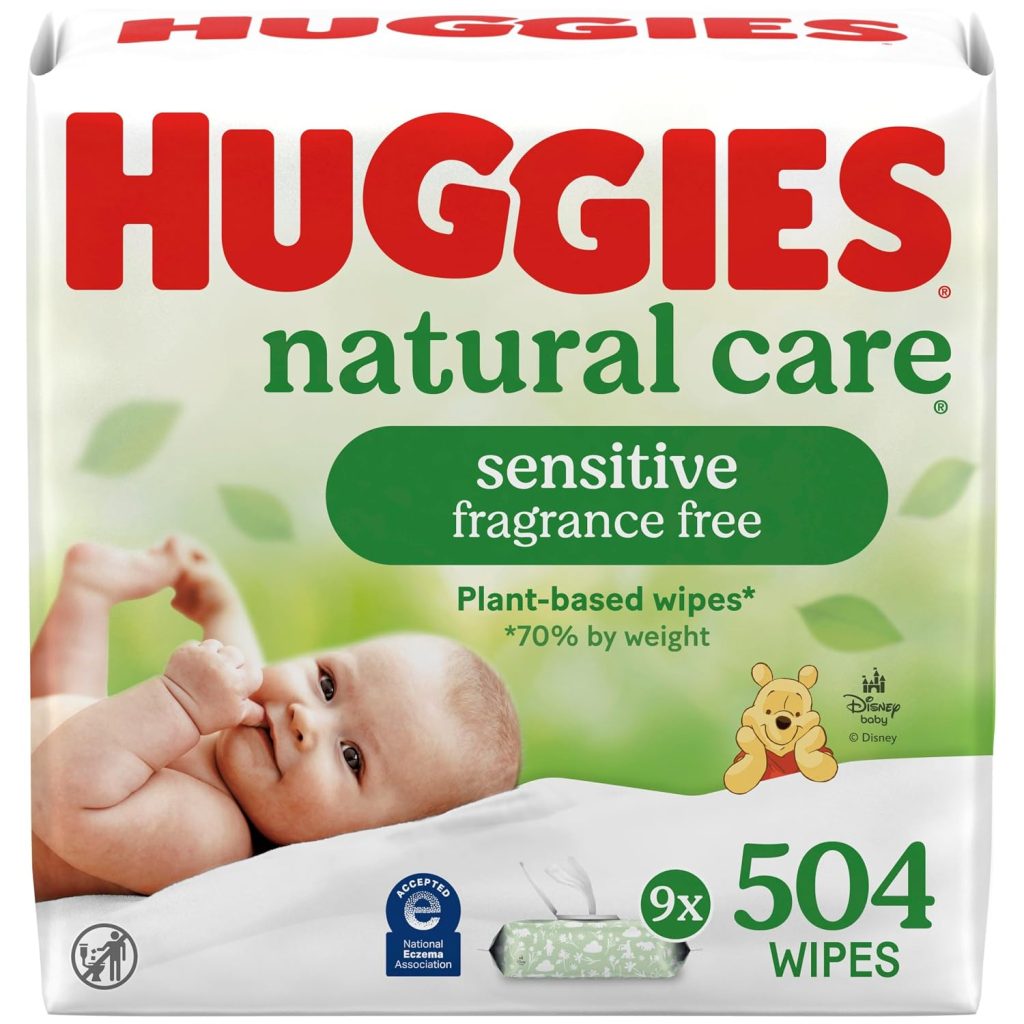
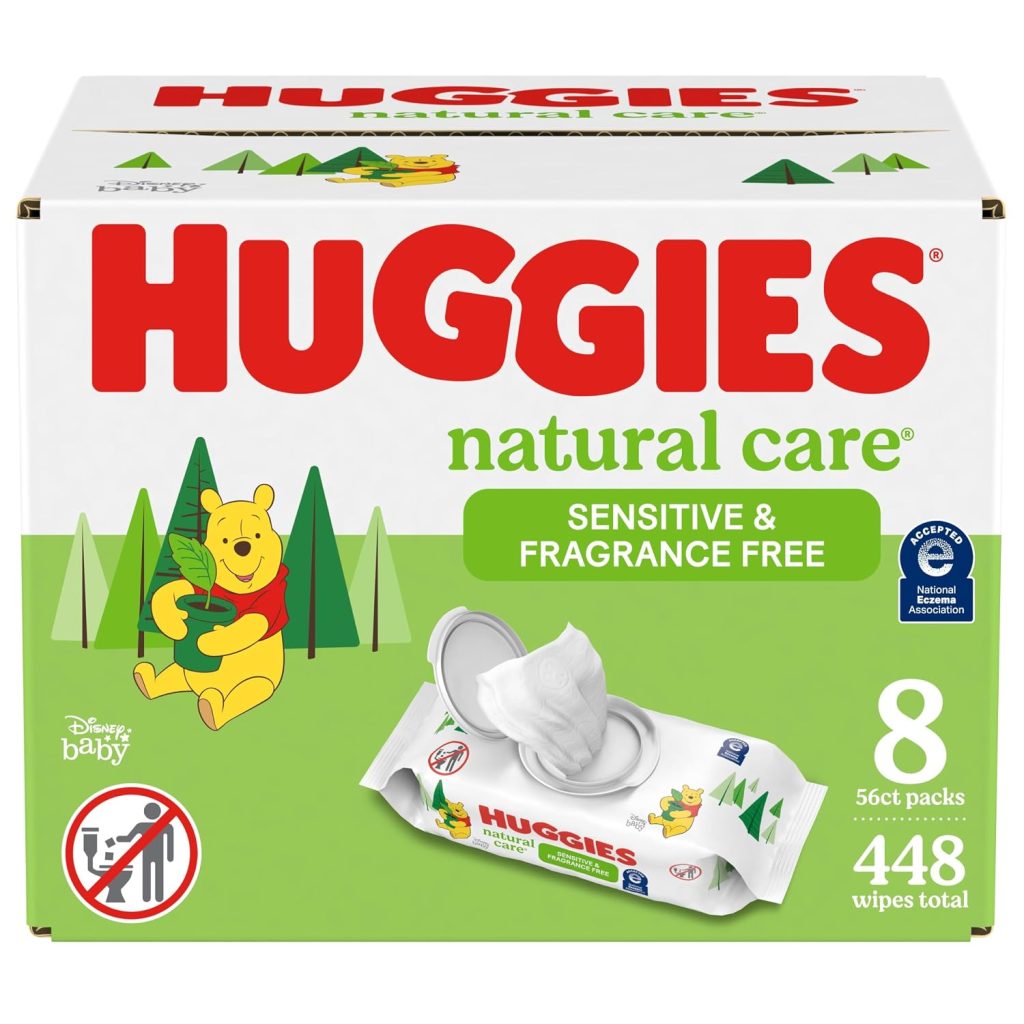
Huggies Natural Care Sensitive Baby Wipes, Unscented, Hypoallergenic, 99% Purified Water, Flip-Top Packs (768 Wipes Total), Packaging May Vary
GBP0.00
Huggies Natural Care wipes — Product overview
Pack details and packaging: This listing is for flip-top packs × wipes = wipes total; the product notes that packaging may vary, so the lid style or outer print might differ between shipments.
Ingredient and claim summary: The formula is described as 99% purified water, fragrance-free, hypoallergenic and dermatologist-tested, pH balanced, and free of fragrances, parabens, phenoxyethanol and alcohol.
Plant-based claim explained: Huggies states these are 70%+ by weight plant-based materials — that means most of the fibrous wipe substrate and some binding agents come from plant sources, while the remaining components (like water-stable polymer blends and lid materials) are synthetic for durability and wet-strength.
Actionable note — what to check on the listing:
- Current price in GBP (the product page currently shows a placeholder of GBP0.00 — update before purchase),
- best-by date if displayed on the carton,
- pack dimensions if you need specific storage space.
If you value exact specs, confirm those three items on the Amazon product page before completing the purchase.
Key features: Huggies Natural Care wipes deep-dive
Dermatology & certifications: The wipes carry the National Eczema Association Seal of Approval and are labelled dermatologist-tested and hypoallergenic — two independent cues that manufacturers have submitted the product for evaluation and that clinical testing was performed. These signals are meaningful for parents of sensitive babies because they connect a formulation to an external standard.
Formulation specifics: At the core is the 99% purified water claim, and the package explicitly excludes fragrances, parabens, phenoxyethanol and alcohol. Each exclusion matters: fragrances are common irritants, parabens and phenoxyethanol are preservatives some caregivers avoid, and alcohol can dry or sting delicate skin.
pH balance and skin health: The wipes are labelled pH balanced, which helps maintain the skin’s acid mantle and reduce disruption during frequent changes. Action step: if your baby has very reactive skin, test by wiping a small area behind the ear for hours and watch for redness or itching.
Plant-based content: The 70%+ by weight plant-based claim refers to components of the wipe fibre and some formulation elements; it does not mean the packaging or all polymers are plant-derived. Tip: if plant-only inputs are a priority, ask the seller for a material breakdown or choose products that advertise 100% plant-derived fibres explicitly.

Material quality and real-world performance
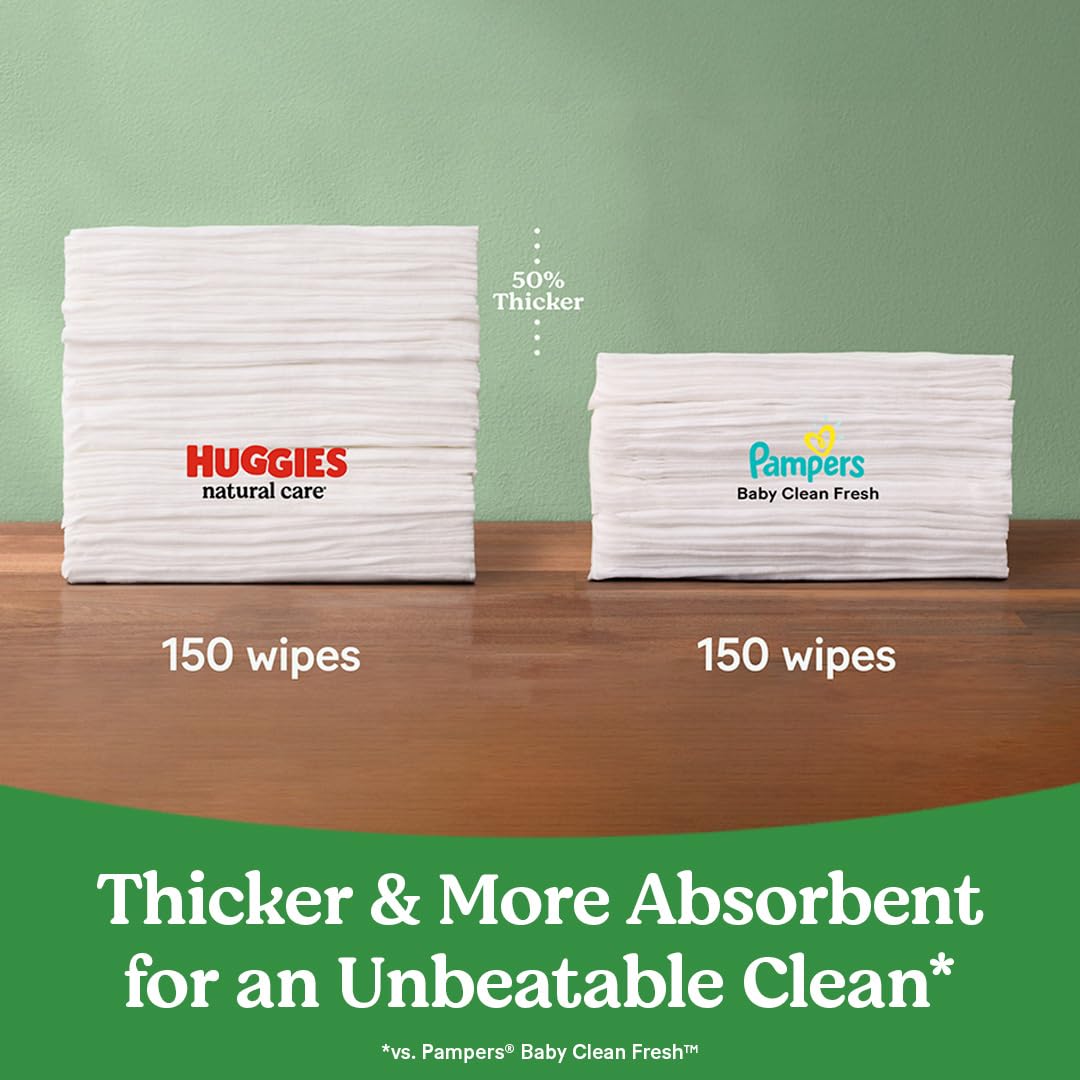
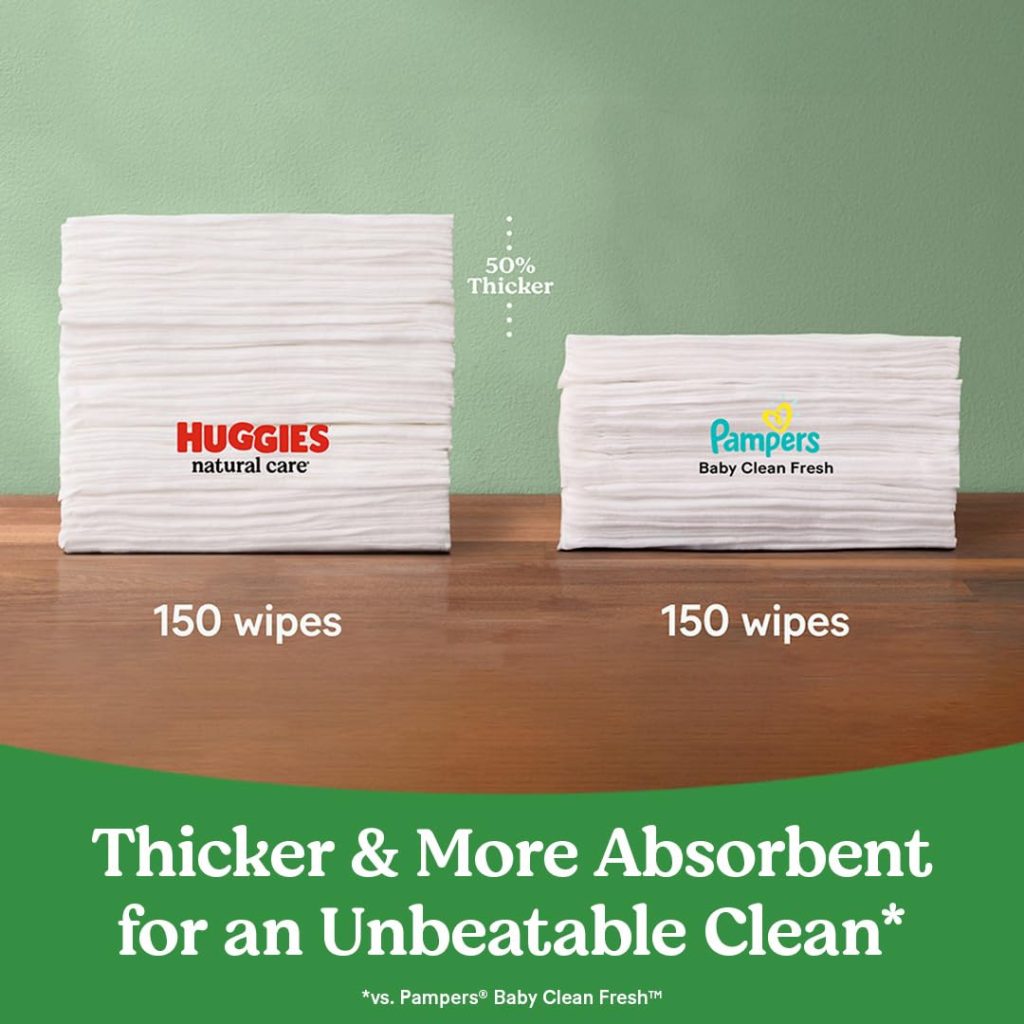
Wipe construction: Overall, shoppers report a soft texture with moderate thickness — most verified buyers describe the wipes as soft but not ultra-thick. Common customer-reported patterns include comments on softness, occasional tearing under heavy scrubbing, and mixed notes on residue (some users notice a slight film, others report none).
Practical tests to run at home:
- Quick strength test: Remove one wipe, gently pull horizontally until you feel resistance, then rub it across a dry paper towel to simulate friction — if it breaks with minimal force or leaves fibrous residue, note that pack as weaker.
- Leak/solids cleanup test: Using a small spoon, place a pea-sized amount of mashed banana or baby food on a washable plate, then use a single wipe with three controlled passes; evaluate how much cleaning power you needed and whether the wipe tore.
- Newborn sensitive-skin patch test: On a small patch behind the ear, wipe once daily for two days and monitor for erythema or dryness; if any reaction appears, stop immediately and document the lot for returns.
Durability vs softness trade-off: Expect a balance — these wipes are softer than many ultra-strong utility wipes but not as heavy-duty as some thicker competitor options. Measurable observations: 1) you’ll probably use 1–2 wipes per simple nappy clean, 2) for heavier messes you may need 2–3 wipes instead of one.
What Customers Are Saying — review patterns and verified feedback
Synthesis of common praise: Many buyers praise the gentleness on newborn skin, the truly unscented formula, and the convenience of flip-top packs. Verified buyers report the NEA Seal and dermatologist-tested label as deciding factors when purchasing for sensitive babies.
Synthesis of common complaints: Customer reviews indicate recurring negatives: occasional flimsy sheets that tear, perceived wetness variation between packs, and packaging inconsistency (different lid types or graphics). Several parents mention that a small percentage of packs arrive drier than others.
How to read the reviews yourself — three practical tips:
- Sort by Most recent to identify current batch issues;
- Filter for Verified Purchase to reduce noise;
- Scan for photos in reviews to check actual wipe size and wetness.
Exact search terms to use in the Amazon review box: “scent”, “tearing”, “eczema”. Use those three terms to quickly filter reviews for the issues that matter to sensitive-skin shoppers.
Actionable takeaway from reviews: Open one pack immediately when it arrives, perform a patch test, and compare its wetness and strength to a wipe you already trust. If any sensitivity reaction occurs, document the lot number (if available) and start a return within the seller’s returns window.
How to calculate cost and value (step-by-step)
Exact calculation method: Cost per wipe = (current pack price in GBP) ÷ 768. The listing shows GBP0.00 as a placeholder, so update the current price before calculating.
Example scenarios:
- Light user (6 wipes/day): ÷ = days ≈ 4.2 months.
- Heavy user (12 wipes/day): ÷ = days ≈ 2.1 months.
These exact day counts help you set a subscription cadence or decide whether bulk buying makes sense for your household.
Value signals beyond price: When weighing cost-per-wipe, prioritise certifications (NEA Seal), ingredient exclusions (no fragrances, parabens, phenoxyethanol, alcohol), and pack convenience. Use this decision flow: sensitivity > convenience > cost. If sensitivity is the top priority, a slightly higher per-wipe cost can be justified by NEA approval and dermatologist testing.
Step-by-step buying decision guidance:
- Confirm current GBP price on the listing; compute cost-per-wipe.
- Cross-check buyer photos and recent reviews for wetness/strength issues.
- If satisfied, consider a trial subscription; if not, test one bundle first before committing to recurring deliveries.
Storage, pack handling and best practices
How to store multiple flip-top packs: Keep unopened packs together in a cool, dry place away from direct sunlight; reseal cut or partially used packs with strong tape; and avoid leaving packs in hot cars for extended periods. These three simple steps preserve wetness and lid integrity.
Three practical tips to keep wipes moist:
- Store boxes on a middle shelf rather than on top of a hot appliance,
- Use waterproof packing tape to reseal any cut edges,
- Rotate packs by opening the oldest sealed pack first.
Using flip-top packs in rotation — exact method:
- Number the unopened packs 1–12 on the outer wrap as they arrive.
- Open pack #1 and use it until it’s 75% depleted.
- Then open pack #2; never open pack #12 until pack #11 is in use — this avoids long exposure times for any single pack.
On-the-go packing: For a day trip bring 1–2 single flip-top packs; place them in a zip-lock bag to prevent lid failure from leaking, and pair wipes with spare nappies, a small changing mat and hand sanitiser. Quick checklist: wipes, nappies, change of clothes, plastic bag for soiled items.
Who these wipes are best for (and who should look elsewhere)
Primary audience: Babies and children with sensitive or eczema-prone skin. The NEA Seal of Approval and dermatologist-tested, hypoallergenic labelling are the main reasons to choose these over generic wipes.
Secondary audience and use-cases: Caregivers who prefer fragrance-free options, nursery staff needing bulk supplies, and households that value a higher plant-content in the substrate.
When to choose a different wipe — three scenarios:
- You need ultra-thick wipes for heavy cleanup — action: try a heavier-duty branded wipe marketed for messes.
- You want the absolute minimal ingredient list — action: consider WaterWipes (manual check recommended).
- You require certified organic materials — action: search for wipes with an organic fibre certification and request a full material breakdown from the seller.
If sensitivity is non-negotiable, these wipes are a strong, cost-effective option; if your priority is the thinnest possible formula or fully organic inputs, look at the recommended alternatives above.
Comparing Huggies Natural Care wipes to Pampers Sensitive Wipes and WaterWipes Unscented
Side-by-side factors to compare: When comparing ingredient transparency, certifications, pack sizes and price-per-wipe, focus on four points: scent (presence/absence), wetness level, softness, and known skin reactions. Create a simple table on paper listing those four points to record your impressions.
Two testing points to use when comparing:
- Perform a 3-pass solids-cleanup test on the same food stain and note how many wipes were required for each brand.
- Do a 48-hour patch test behind the ear for each brand, using a different site for each wipe type to compare skin reaction.
Decision guidance: Choose WaterWipes if you want the most minimal ingredient list; choose Pampers Sensitive if you prioritise certain textures or wide retail availability; choose Huggies Natural Care when you want a balance of NEA-backed gentleness and bulk convenience. Use your cost-per-wipe calculation to decide whether the premium for a specific advantage is worthwhile.
How to buy smart: timing, pack sizes, and subscription tips
When to buy: Watch for multi-pack discounts, subscribe & save offers, and occasional lightning promotions. Three timing tips: 1) set a price-drop alert for the product page, 2) buy bulk before expected price increases (for example, before seasonal demand rises), 3) start with a trial pack if you’re testing sensitivity reactions.
Pack size strategy: A 768-wipe bulk makes sense if you have one baby who uses several wipes per day or if you’re supplying a nursery. If you rarely use wipes, a smaller multi-pack reduces risk of dry packs. Quick decision flow: single baby (bulk often OK) vs daycare (bulk recommended) vs occasional user (buy a smaller starter pack).
Subscription checklist: When you enable subscription, check cadence against your estimated usage (use the cost-per-wipe calculation to set delivery every X months), confirm you can pause or skip deliveries easily, and order one bundle first to ensure no sensitivity issues before committing to recurring purchases.
Final section: quick product snapshot and action checklist
Snapshot:
- Pack count: flip-top packs (768 wipes total)
- Key claims: Unscented, hypoallergenic, 99% purified water
- Certification: National Eczema Association Seal of Approval
Action checklist for buyers:
- Check the current price in GBP on the product page (the listing currently shows GBP0.00 as a placeholder).
- Open one pack and do a patch test on a small area of your baby’s skin for hours.
- Calculate the cost-per-wipe using the pack price ÷ and decide your subscription cadence based on usage.
Next steps — how to compare with Pampers Sensitive and WaterWipes: Use the Amazon search box with terms: “Pampers Sensitive Wipes” and “WaterWipes Unscented” and open their product pages to compare ingredient lists, certifications and pack sizes side-by-side. Look specifically for photos of actual packs and recent verified-purchase reviews when deciding which product to order first.
Pros and Cons
Pros
- Unscented and hypoallergenic formula with the National Eczema Association Seal of Approval
- High water content: labelled 99% purified water and pH balanced for sensitive skin
- Large bulk: flip-top packs for wipes total (convenient for families or daycare use)
- Flip-top packs are easy to use and help reduce drying when used as intended
Cons
- Some packs can feel less wet than others — verified buyers mention wetness variability between batches
- A recurring complaint is occasional flimsy sheets that tear under heavy cleanup
- Packaging inconsistency: ‘packaging may vary’ is accurate and some buyers report different lids/styles
- Not 100% plant-derived — labeled 70%+ by weight plant-based, so some synthetic materials remain
Final Verdict
Key Takeaways
- These wipes balance gentle formulation (NEA Seal, dermatologist-tested) with bulk convenience (768 wipes per bundle).
- Do a simple strength and patch test when your pack arrives—this prevents surprises with wetness or skin reactions.
- Calculate cost-per-wipe using the current GBP price (update placeholder) and prioritise sensitivity over small price differences when choosing a recurring subscription.
Frequently Asked Questions
Are these wipes safe for babies with eczema?
Yes. These wipes carry the National Eczema Association Seal of Approval and are labelled dermatologist-tested and hypoallergenic, which makes them a common recommendation for sensitive or eczema-prone skin. Still, always do a patch test before regular use.
How do I calculate the cost per wipe?
Cost per wipe = (current pack price in GBP) ÷ 768. The listing shows GBP0.00 as a placeholder, so update the current GBP price on the product page before doing the calculation. Use the result to compare with alternatives like WaterWipes and Pampers Sensitive.
How should I store and carry the 12-pack to keep wipes moist?
Yes. Store unopened flip-top packs in a cool, dry place away from direct heat; open packs in sequence; reseal cut packs with strong tape; and keep an extra small pack in your changing bag. See the storage rotation steps below for a simple numbered routine.

![Pampers Swaddlers Disposable Baby Diapers Size 4, One Month Supply (150 Count) with Sensitive Water Based Baby Wipes 4X Pop-Top Packs (336 Count) [Packaging May Vary] review](https://babymomtips.com/wp-content/uploads/2026/10/pampers-swaddlers-disposable-baby-diapers-size-4-one-month-supply-150-count-with-sensitive-water-based-baby-wipes-4x-pop-1-218x150.jpg "Pampers Swaddlers Disposable Baby Diapers Size 4, One Month Supply (150 Count) with Sensitive Water Based Baby Wipes 4X Pop-Top Packs (336 Count) [Packaging May Vary] review")
![Pampers Swaddlers Disposable Baby Diapers Size 5, One Month Supply (132 Count) with Sensitive Water Based Baby Wipes 4X Pop-Top Packs (336 Count) [Packaging May Vary]](https://babymomtips.com/wp-content/uploads/2026/09/pampers-swaddlers-disposable-baby-diapers-size-5-one-month-supply-132-count-with-sensitive-water-based-baby-wipes-4x-pop-218x150.jpg "Pampers Swaddlers Disposable Baby Diapers Size 5, One Month Supply (132 Count) with Sensitive Water Based Baby Wipes 4X Pop-Top Packs (336 Count) [Packaging May Vary]")